DISEASE PROGRESSION
IgA nephropathy (IgAN) has a variable but progressive clinical course, which can negatively impact patients’ quality of life (QoL)1–5
The clinical presentation of IgAN and the risk and rate of progression to end-stage kidney disease (ESKD) is highly variable between patients1–4
Patients may present with:1–5
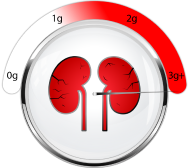
High proteinuria

Macroscropic and microscopic
hematuria

Renal insufficiency

Hypertension
Acute kidney injury

Edema
IgAN patients may also be asymptomatic.2,5
The majority of patients are diagnosed by chance late in the disease course with significant proteinuria and impaired kidney function.6 Almost 2/3 patients have CKD stage ≥3 at diagnosis.7,8
In these asymptomatic cases, IgAN may only be detected by routine testing
Kidney biopsy is essential for confirmation of diagnosis in IgAN and to guide subsequent clinical care decisions2,9
The 2025 KDIGO guidelines recommend that to ensure an early diagnosis and prompt treatment of IgAN, a kidney biopsy should be considered in all adults with proteinuria ≥0.5 g/day in whom IgAN is a possible diagnosis and kidney biopsy is not contraindicated.6
Similarly, the rate at which patients progress through different stages of IgAN to kidney failure can be highly variable10–14

Up to 53% of patientsprogress to ESKD within 20 years of an IgAN diagnosis10–12*
In a population-based cohort study (N=3,622), patients with IgAN were found to have a:13

53% increased risk of mortality compared to matched controls

6-year reduction in life expectancy compared to matched controls
Variation in clinical course and outcomes leads to delayed diagnosis in patients presenting with established kidney disease2,14